

This article I wrote in 2023, for the local genealogy and historical research association in my parish. It was part of many articles collected and printed in the tri-annual book of the community of Taberg, in the village where I live, which is part of Månsarp Parish.
It was published in 2024 and it was an honor to get the question if I could share this piece of history to the community. So I did.
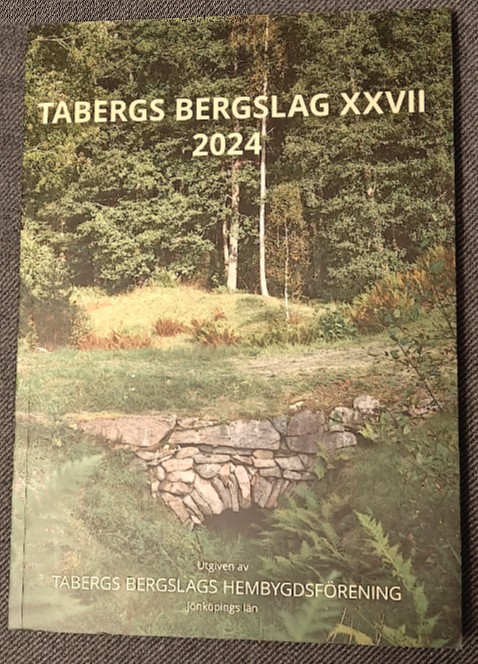
I have now decided to share the article, translated into english, and I hope you will find it interesting.
One evening, several years ago in the city of Ypres (Ieper) in West Flanders, Belgium, I discovered Scandinavian names on the great First World War monument, the Menin Gate Memorial, and I decided to search for these names in digital archives. The results I found showed that they were Swedes born in Sweden, and I then decided to highlight their contributions as Swedish citizens, as this is a blind spot in our Swedish history. I did not realize at the time that I would find hundreds more soldiers with Swedish backgrounds who fought in the First World War, and through this, also soldiers with roots in my home parish of Månsarp.
The focus of my project is to connect these individuals to the terrain and to broaden the understanding of their fates by linking the places they came from in Sweden to the places where some of them fell on the battlefields and were buried, or are commemorated by their names on memorials. I recreate their individual stories, from the time they left Sweden to the place where they have their final resting place today.
Swedish-Born Soldiers in the First World War?
It is interesting to ask why and how Swedish-born individuals ended up in the First World War between 1914 and 1918. Sweden as a country was officially neutral at the time, even though it was affected by the war.
Most of the Swedish-born individuals in my research participated after they had emigrated and become citizens of their new countries. Many of the men who left Sweden did so either as small or young children before reaching the age to be called up for conscription in what was then the Swedish Armed Forces (Krigsmakten).
Many were subsequently drafted when it was time for the various countries to call men into their respective armies, in accordance with their military service laws. This was not always popular among our Swedish emigrants, but in the United States, it was a requirement for obtaining or retaining citizenship. However, some volunteered before reaching conscription age.
Most Swedes who fought in the First World War did so for their new countries, particularly those who emigrated to the USA, Canada, Australia, and New Zealand. Currently, the results of my research indicate that most Swedes who fought in the First World War on the Western Front did so for the American forces, the American Expeditionary Force. (AEF), followed by the Canadian and Australian forces. America introduced conscription through its Selective Service Act (referred to as the “Military Service Act”) in May 1917.
Based on the information I have found so far, the Swedes who chose to fight on the German and French sides did so as volunteers, although there were also Swedes who voluntarily joined the Canadian, Australian, and New Zealand forces, since Australia did not have conscription, and New Zealand introduced its conscription law in August 1916. I found a few individual Swedes, born in Sweden, who fought for the British armies.
So far, I have not found anyone who fought for other countries in the war on the Western Front who is buried there, although there were Swedish individuals who, for example, fought for South African forces within the combined British forces, the British Expeditionary Force. (BEF).
Searching for Facts in the Archives
When compiling all the facts I could gather about the individuals I found in various archives, I decided to search for individuals from my home parish of Månsarp. I began searching manually in the Swedish National Archives (Riksarkivet), in their digital archives, and also by searching through the digitally scanned church records from Arkiv Digital. I read through the records to see if anyone had emigrated to America, and subsequently searched for more information using online genealogy services, such as Ancestry, to try to uncover further details about these individuals.
I immediately found certain individuals who were either born in Månsarp parish, or born in other parishes while living in Månsarp when they emigrated. In this chapter, I will describe the individuals who were born in, or lived in, Månsarp parish when they emigrated to America and were called up for draft registration for the American forces there. Some of them also participated in the fighting on the Western Front in France. Below you will also find an individual who fought on the German side. The Swedes who chose to fight on the German side in the war were mostly officers from the Swedish Army who resigned from their commissions in Sweden and joined the German forces. Compared to the individuals who fought for the other countries described above, these were very few in number.
The individuals I found in the archives are listed below, with their name, place of residence, date of emigration, and destination. This does not mean that I have found everyone, as there may be more who fall within the criteria described above.
| Name | Place | Emigrated | New Location |
| Andersson, Gustaf Alexius | Renstorp | February 26, 1910 | America |
| Andersson, Oskar Fridolf | Renstorp | May 23, 1908 | America |
| Aronsson, Karl Johan | Tahe, Målön | August 23, 1905 | America |
| Bodén, Erik | Taberg | July 22, 1908 | America |
| Fransson, Tor Harry | Bråten | February 25, 1910 | America |
| Gabrielsson Wennblad, Axel Hjalmar | Bråten | August 29, 1905 | America |
| Gustafsson, Anders Enok | Hacklarsbo, Månsarp | September 20, 1911 | America |
| Johansson, Simon Ignatius | Hestra | February 17, 1903 | America |
| Johansson, Ture David Bertil | Tranhult | March 13, 1912 | America |
| Kristoffersson, Ernst Magnus Robert | Renstorp | September 26, 1913 | America |
| Kristoffersson, Walter Sjunne | Bråten | September 26, 1913 | America |
| Swahn, Bror Jonas Wilhelm | Kåperyd | February 1910 | America |
The places listed above are those referred to in the church records and may indicate either that they lived at that location or worked there at the time they emigrated.
Ture David Bertil Johansson also had a brother, Gustav Edvin Johansson, who emigrated to America as early as 1906, though I have not found any draft registration documents for him from the First World War—only a Second World War draft registration card for the U.S. forces, by which time he was already 58 years old.
In addition to First World War draft registration records, Anders Enok Gustafsson, Axel Hjalmar Gabrielsson Wennblad, Carl Johan Aronsson, Gustaf Alexius Andersson, Tor Harry Fransson, Walter Sjunne Kristoffersson, and Ernst Magnus Robert Kristoffersson also had registration documents for the Second World War. However, to my knowledge, none of them actively fought in that war.
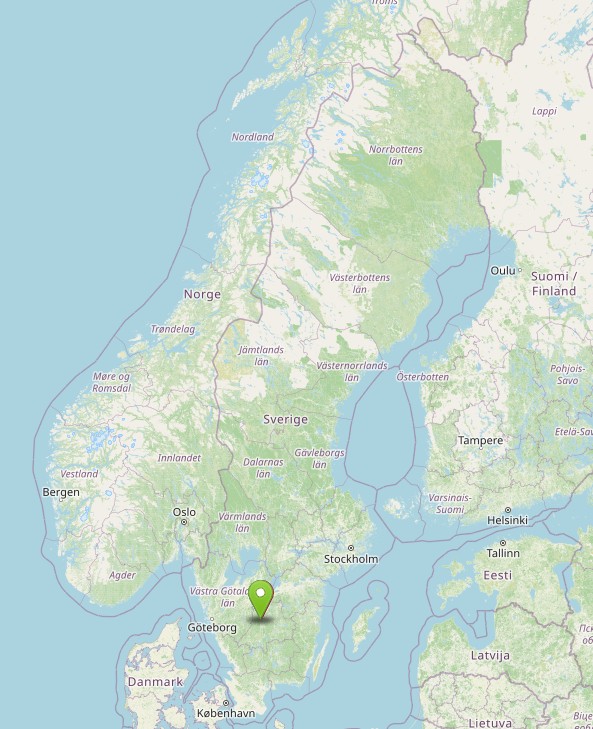
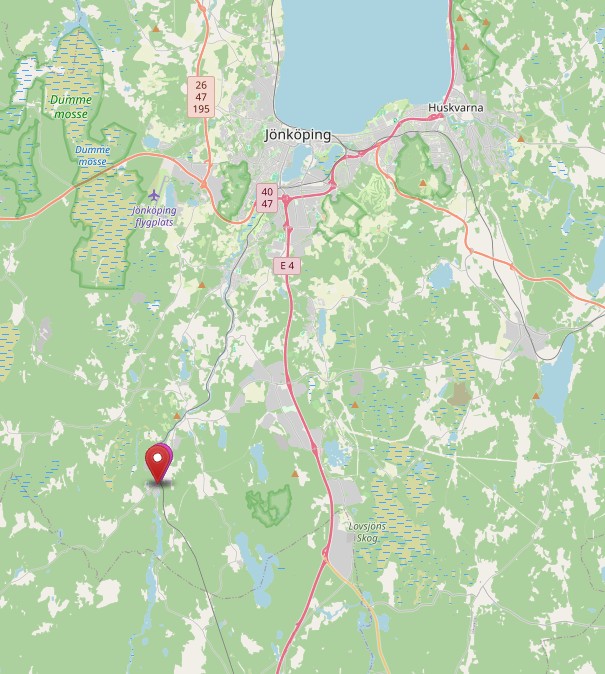
Månsarp on the Map
At the Front
Even though they were drafted into the U.S. Army, it did not necessarily mean they had to travel across to Europe and take part in the fighting. Only a few of the individuals mentioned earlier actively served at the front during the First World War. However, most received some form of training at one of the military bases established and may have belonged to reserve units kept ready for deployment to the fighting in Europe.
I will hereby elaborate on a few stories of the individuals who, according to discovered records, served at the front—specifically on the Western Front in France.
Bror Jonas Wilhelm Swahn
Bror Jonas Wilhelm was born at Västra Klinikerna in Jönköping on September 24, 1888. In 1909, Wilhelm completed his military service with the Royal Norrland Artillery Regiment in Östersund (A 4), where he attained the rank of Warrant Officer (Styckjunkare). He returned to Bråten in Månsarp parish in December 1909 and was recorded in the church register at that time as an officer volunteer (officersvolontär).
Subsequently, records note that Wilhelm left Sweden and arrived in New York in February 1910. I have not been able to find any information on when Wilhelm left the USA and enlisted in the German Army. It is also unclear what prompted him to do so, though it follows a pattern in which certain Swedish officers joined the German Army after resigning their commissions in the Swedish Army.
Wilhelm had likely already severed his military ties back in 1910 when he emigrated to the USA. He fought for the German unit 122nd Bavarian Infantry Regiment (or 122nd Fusilier Regiment) and may have been in the area around Bethincourt, Argonne, France, when he was severely wounded. Wilhelm died at the German military hospital in Swabia (Schwaben), Germany, on October 23, 1917. Below are a couple of newspaper clippings describing the event.
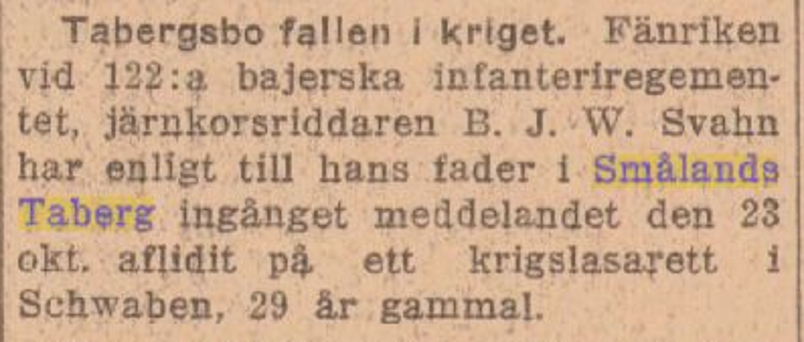
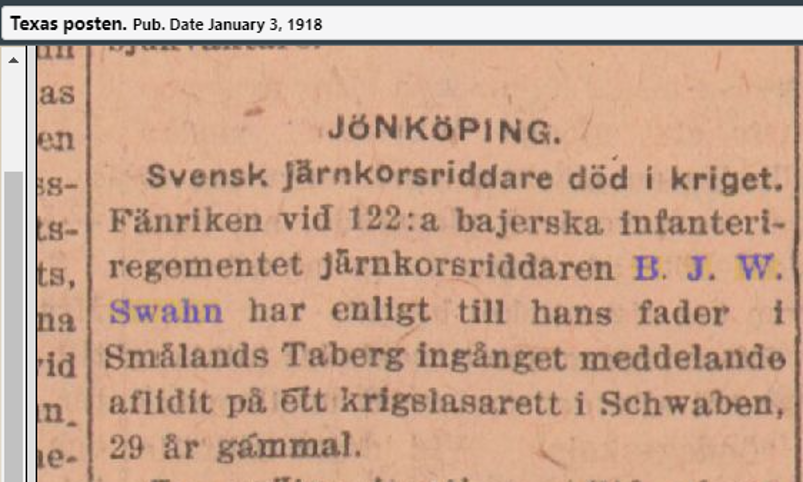
[Archive Note / Image Caption: Newspaper clippings from Swedish-American newspapers reporting that Ensign B. J. W. Swahn, recipient of the Iron Cross, died at a military hospital in Swabia at age 29, as communicated to his father in Smålands Taberg (including a clipping from Texas Posten, published January 3, 1918).]
Wilhelm was awarded the Iron Cross, though it is unknown why or under what circumstances. Today, he is buried at the German military cemetery Gmünd-Leonhardsfriedhof in Swabia, Germany. I have not yet been able to visit him and his headstone, but below is a photograph from the cemetery. He is the only one of the mentioned individuals from Månsarp parish who fell in the First World War.
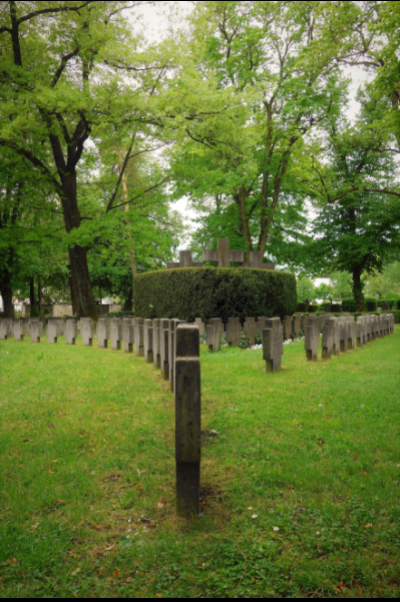
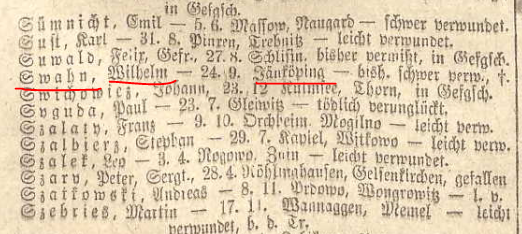
[Archive Note / Image Caption: Photograph from the Gmünd-Leonhardsfriedhof cemetery in Swabia, Germany, and an excerpt from the 1917 German casualty lists (Verlustlisten) listing ‘Swahn, Wilhelm – 24. 9. Jönköping – bish. schwer verw., †’ (previously severely wounded, died).]
Axel Hjalmar Gabrielsson-Wennblad
Axel Hjalmar was born on February 11, 1889, in Skogslund, Månsarp parish, “in the shadow of the great mountain of iron,” as mentioned in his obituary when he passed away in 1962.
Initially, Axel’s surname was Gabrielsson, but from 1900 onward both surnames, Gabrielsson-Wennblad, were used, later becoming simply Wennblad around 1900. In American records, the surname Wennblad instead became “Vanblad.” It was very common for Swedish surnames to be Anglicized—made easier to pronounce in English—when individuals arrived in America.
Axel followed in his father’s footsteps and became a blacksmith. Axel emigrated to America on August 29, 1905, at the age of 16. His brother, Carl Johan, had left Sweden for America as early as March 1892. Axel arrived at his brother’s property and lived there until he married Rose Helen Liebel in 1930, in the city of Olean, Cattaraugus County, New York.
Before his marriage, Axel registered for the draft on June 5, 1917, and was sent to the front in France in mid-1918, serving there as a private in the Headquarters Company of the 314th Field Artillery, 80th Division, in the American Expeditionary Forces. He took part in major, well-known battles in France, such as the St. Mihiel Offensive and the Meuse-Argonne Offensive.
He received two citations for bravery for carrying out his duties under enemy fire. His task was to set up barbed-wire entanglements in “No Man’s Land” between the opposing front lines, which was considered an extremely dangerous job. He returned to the USA in July 1919. Axel died at Bradford Hospital on April 15, 1962, and was buried with military honors at Rosehill Cemetery, Smethport, Pennsylvania, USA
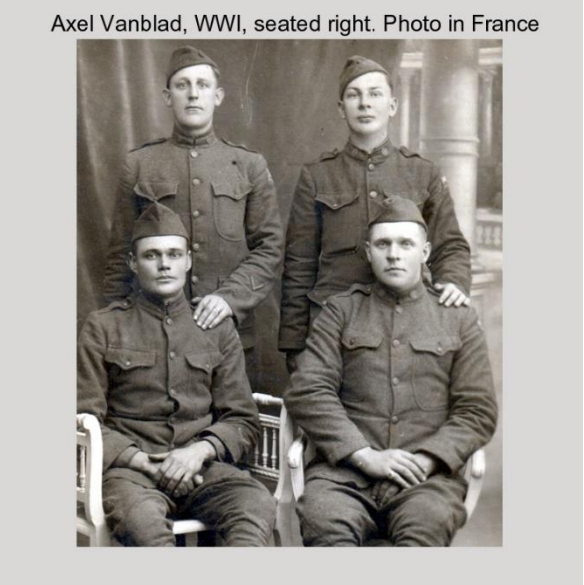
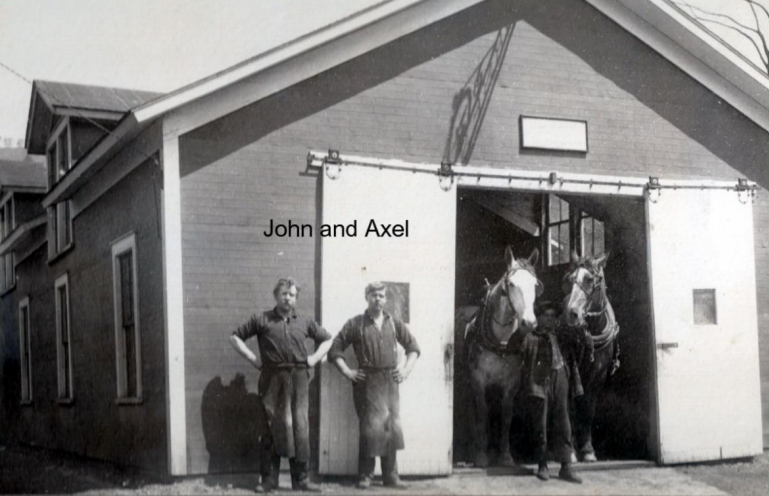
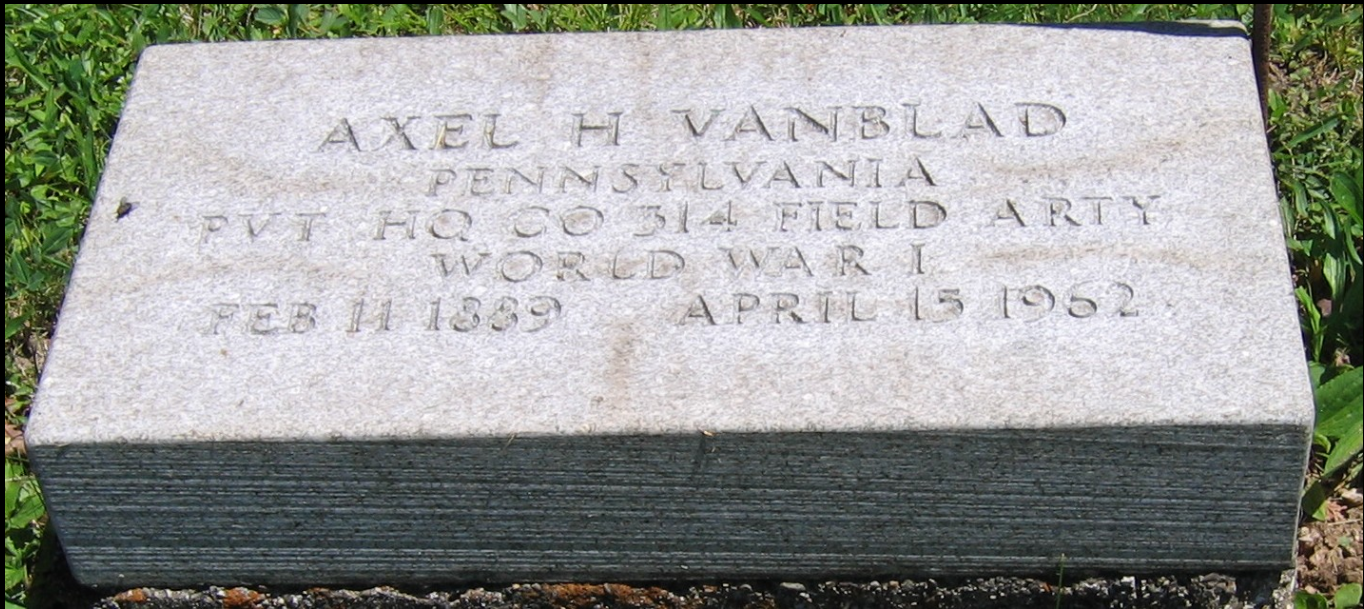
[Archive Note / Image Caption: Photographs from Axel’s military service: Axel Vanblad seated on the lower right in a group portrait taken in France; Axel and his brother Carl Johan outside the blacksmith shop in Smethport; and Axel’s military headstone at Rosehill Cemetery, Smethport, Pennsylvania (‘AXEL H VANBLAD / PENNSYLVANIA / PVT HQ CO 314 FIELD ARTY / WORLD WAR I / FEB 11 1889 – APRIL 15 1962’).]
The Kristoffersson Brothers
One of the things that moves me deeply are the moments when I get to meet relatives of the Swedish-born soldiers who took part in the First World War, listening to them to learn more about these individuals while also gaining a piece of their local history in Sweden.
One such moment occurred when I visited Gunborg Bringevik, the niece of Ernst Magnus Robert Kristoffersson and Walter Sjunne Kristoffersson, both of whom registered for the U.S. Army after emigrating to North America from Sweden in 1913. This meeting came about as a result of a lecture I gave at the Månsarp parish hall.
One of the attendees recognized one of the names of the soldiers who had served in the American Expeditionary Forces during the First World War: Ernest M. R. Christopherson, whom we know as Ernst, mentioned earlier in the text. The attendee sent me Gunborg’s phone number, allowing us to arrange a meeting.
Gunborg’s mother, Aina Ida Viola Kristoffersson, was the only one out of a total of 9 siblings who did not emigrate to North America from the Bråten farm here in my home village of Taberg in Småland. Aina took good care of her parents here in Sweden, while staying in touch with many of her siblings through letters from North America almost every week. Aina was the youngest of the siblings, alongside her twin brother Bror, nearly 25 years younger than the oldest sibling.
Ernst was the only one of the two brothers who traveled across to the front in France. He registered in the U.S. draft on June 5, 1917, while living at Wilson Place in Jamestown, New York, where he resided with his sister Bertha and her family. As far as I understand, his brother Walter also lived there at that time.
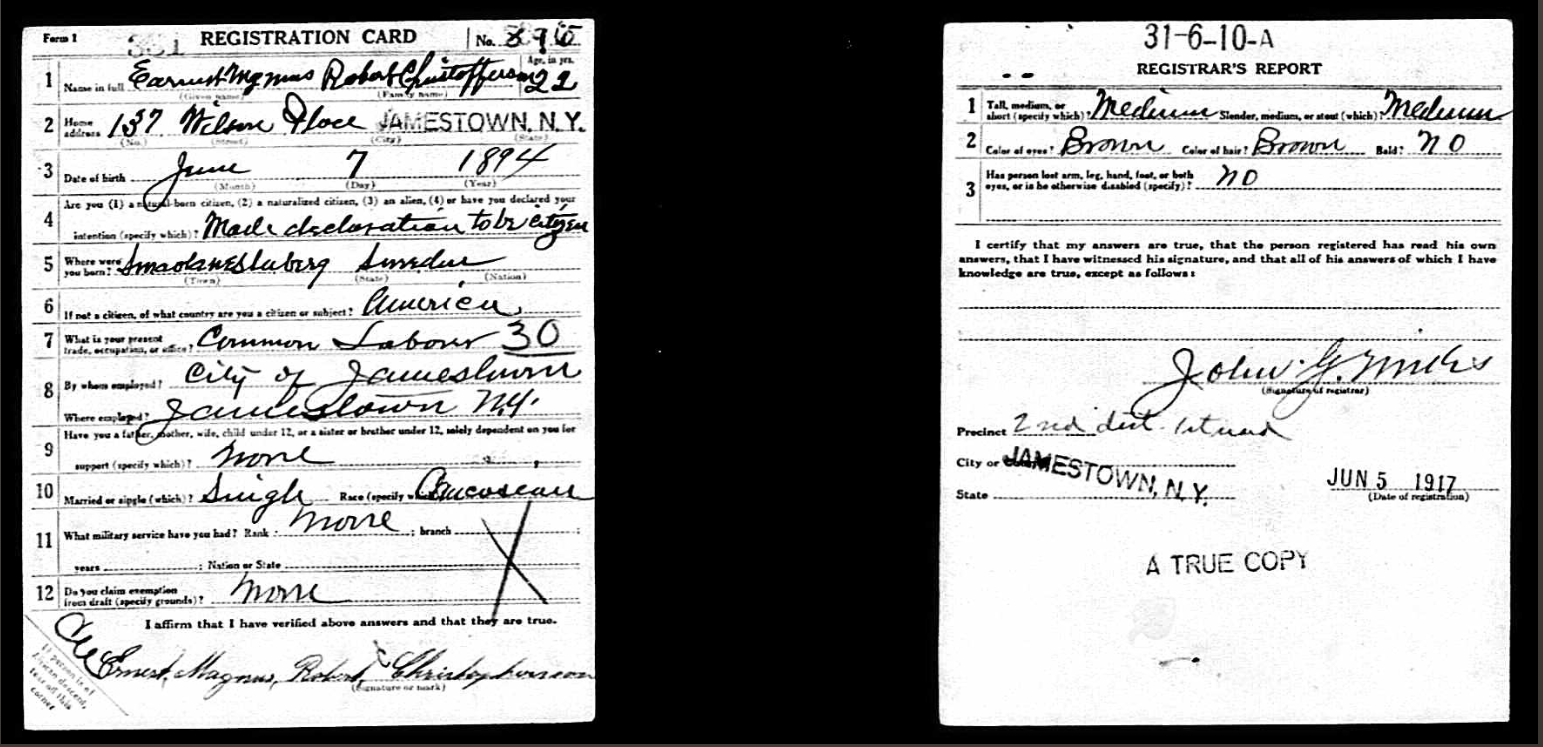
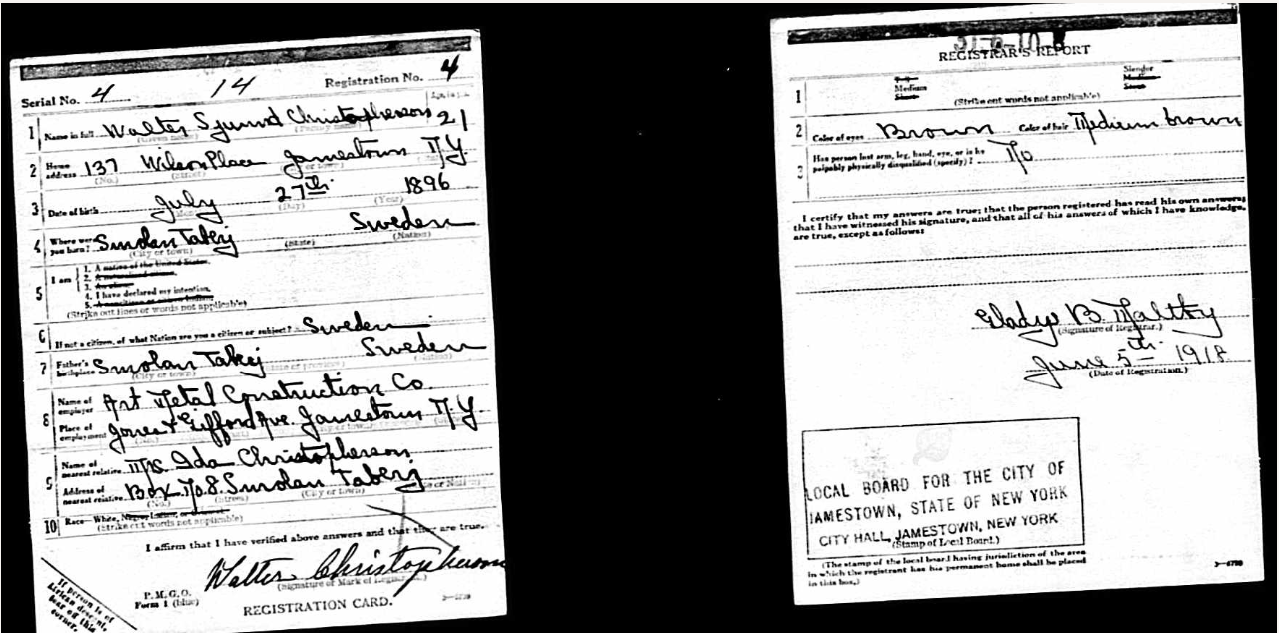
[Archive Note / Image Caption: WWI Draft Registration Cards dated June 5, 1917, for Ernst Magnus Robert Kristoffersson and Walter Sjunne Kristoffersson, both residing at 137 Wilson Place, Jamestown, N.Y.]
Ernst was sent to France on May 27, 1918, with his unit, the 307th Field Artillery, which belonged to the 153rd Field Artillery Brigade of the 78th Infantry Division.
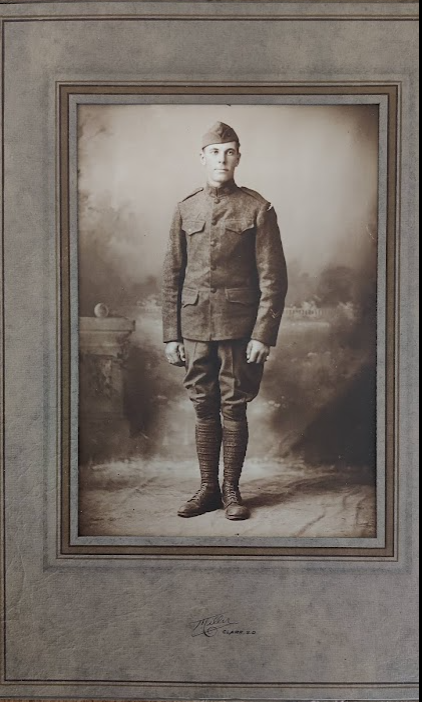
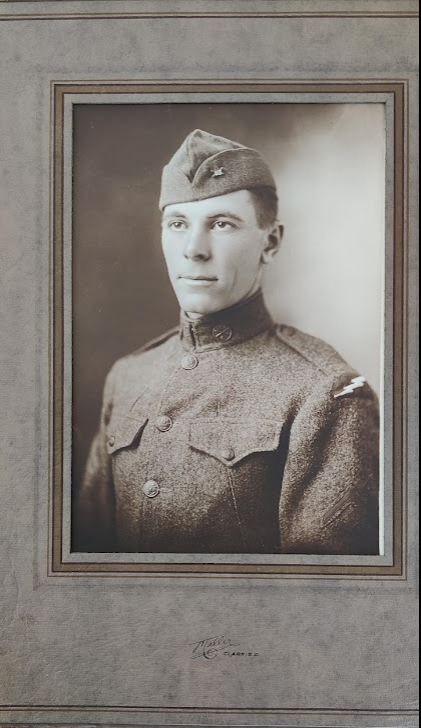
[Archive Note / Image Caption: Photographs of Ernst Magnus Robert Kristoffersson from the private family album showing the 78th Division shoulder sleeve insignia on his left shoulder.]
The first unit of the division arrived in France on May 18, 1918, and the final elements arrived on June 12, 1918. The artillery brigade supported the 90th Infantry Division during the St. Mihiel Offensive and rejoined the 78th Division on October 4, 1918. Axel Gabrielsson-Wennblad also participated in the same offensive, though in a different unit.
On October 4–5, 1918, the entire division moved to the Forêt de la Reine and then to the Clermont-en-Argonne area in France. On October 10, they moved to the eastern part of the Argonne Forest, establishing headquarters in Varennes.
Ernst survived his time at the front, and his discharge papers dated May 22, 1919, record a 0 percent disability rating; however, the family shared that he struggled with his hearing for the rest of his life—which is hardly surprising after serving in an artillery unit.
In the church records, I can see that Ernst visited Sweden at least once during the 1960s, before passing away in 1977 in the USA after having lived there since 1913. His younger brother Walter died in 1955 after battling an illness.
Ernst’s brother, Walter Sjunne, registered for the draft in June 1918, but according to the records, he never served overseas. Both brothers were registered for the draft during the Second World War, though neither had to deploy overseas.
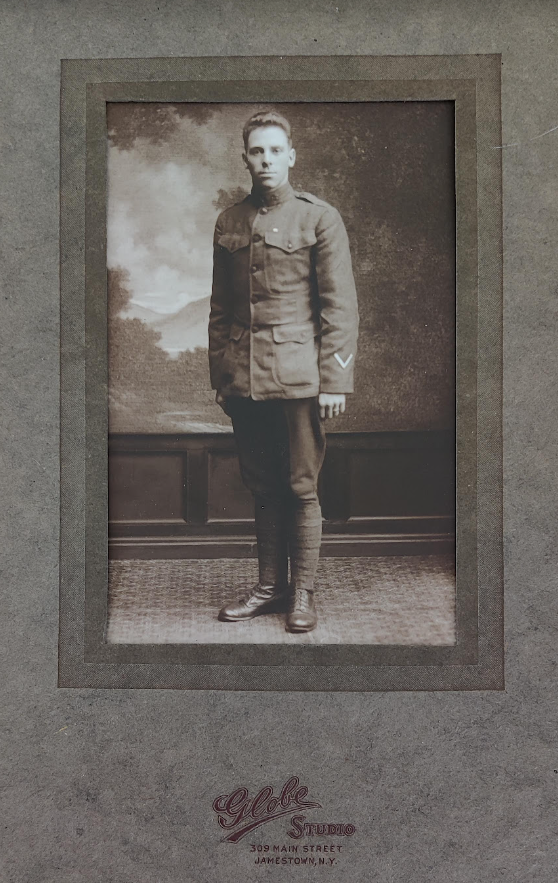
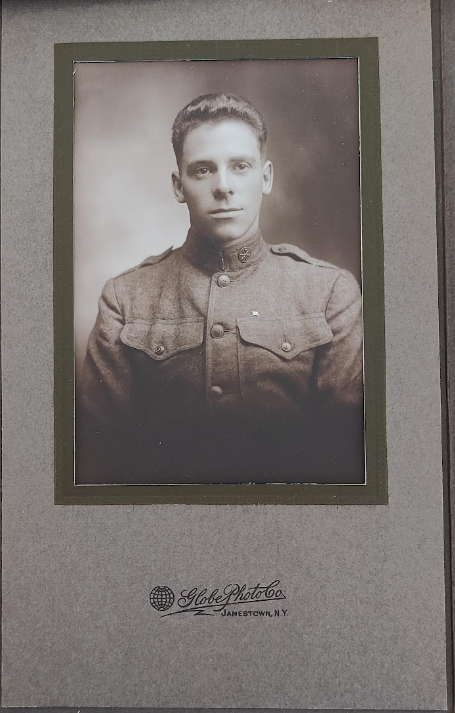
[Archive Note / Image Caption: Photographs of Walter Sjunne Kristoffersson in uniform from the private family album.]
Oskar Andersson
Oskar Fridolf Andersson was born on December 29, 1888, in Månsarp parish and grew up at Holmåsen, Renstorp, with his parents, Manna Kristina Johansdotter and Peter Magnus Andersson.
The church records note that he left Sweden for North America on May 23, 1908, at the age of 20, meaning he departed before completing his mandatory military conscription in Sweden, for reasons unknown. On October 15 of the same year, 1908, his sister Sigrid Margareta also left Sweden for North America.
Oskar arrived in Chicago, Illinois, in June 1908, which is likely where his sister went later when she arrived in the USA in October of that year, as this was listed as the address of Oskar’s next of kin.
He later listed an address in Dixon, South Dakota, in his paperwork, which I found in various passport applications and similar records. He lived in Dixon until 1916 and then moved to Chicago. His sister Sigrid was listed as his next of kin when he departed North America for France and the Western Front in September 1918.
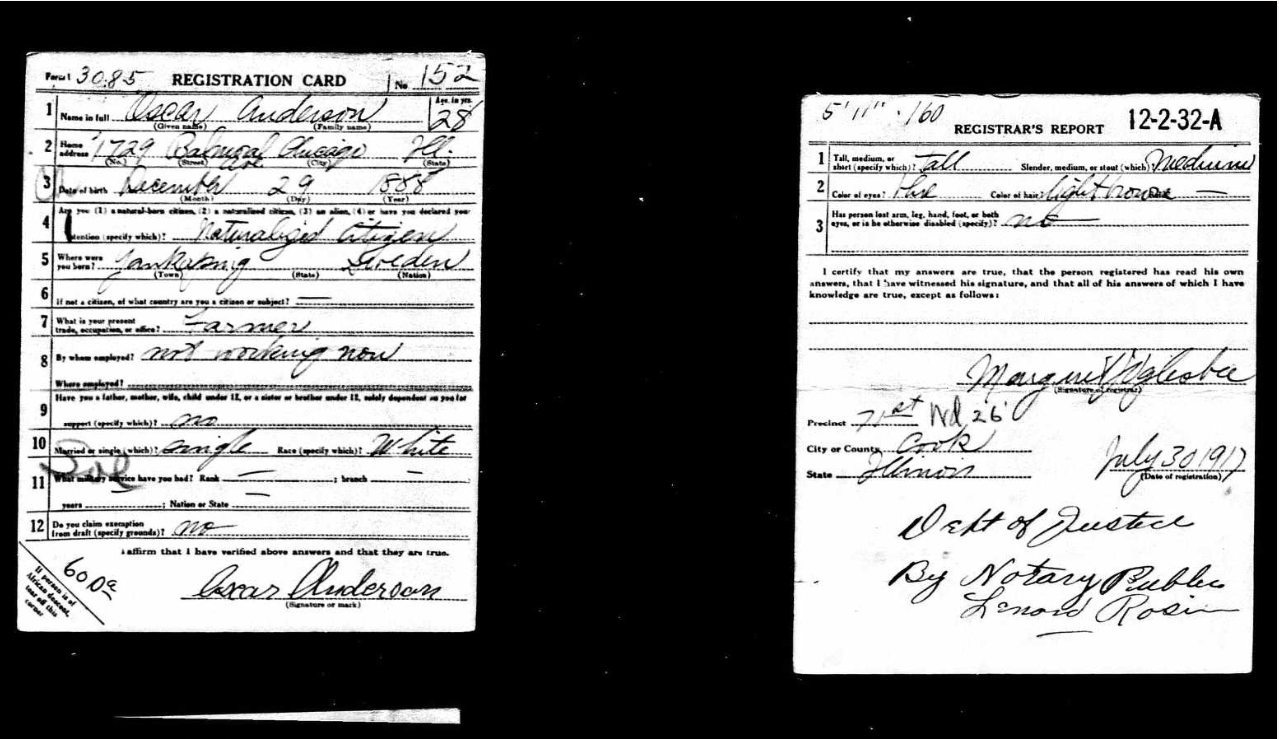
[Archive Note / Image Caption: WWI Draft Registration Card dated July 30, 1917, for Oscar Anderson, residing at 1729 Balmoral Ave, Chicago, Illinois.]
Records from various archives indicate that Corporal Oskar Andersson belonged to the 344th Infantry Regiment (referred to as battalion in the notes), 86th Division of the American Expeditionary Forces, when he departed New York aboard the ship “Megantic” on September 9, 1918. They arrived in Bordeaux, France, where the unit established its headquarters, from which the 86th Division sent replacements to the front in the Meuse-Argonne sector further northeast in France. They continued doing so until November 8, 1918, when they moved down to Le Mans, France. The war ended three days later, on November 11.
It is not known whether Oskar served directly at the front lines during the months he was there, but he remained in France until June 29, 1919, when the unit returned to North America, arriving in July 1919. Oskar belonged to the Depot Support Company—a support unit for the replacement troops being organized in France—before returning home, though it is unknown when he transferred between the two units.
Oskar survived the war and lived in North America for several more years before returning to Sweden. From passport applications in the archives, I know that he visited Sweden in 1916 and 1917 before eventually moving back permanently to Månsarp, the parish where he was born.
Oskar died in 1972 at the age of 83 and is buried today in Månsarp Cemetery, where a headstone stands marking the family grave.
I thank Oskar for his service in the Great War, and today it feels wonderful to know that there is a headstone nearby connected to the story of what Swedish-born soldiers did for their new countries during the Great War.
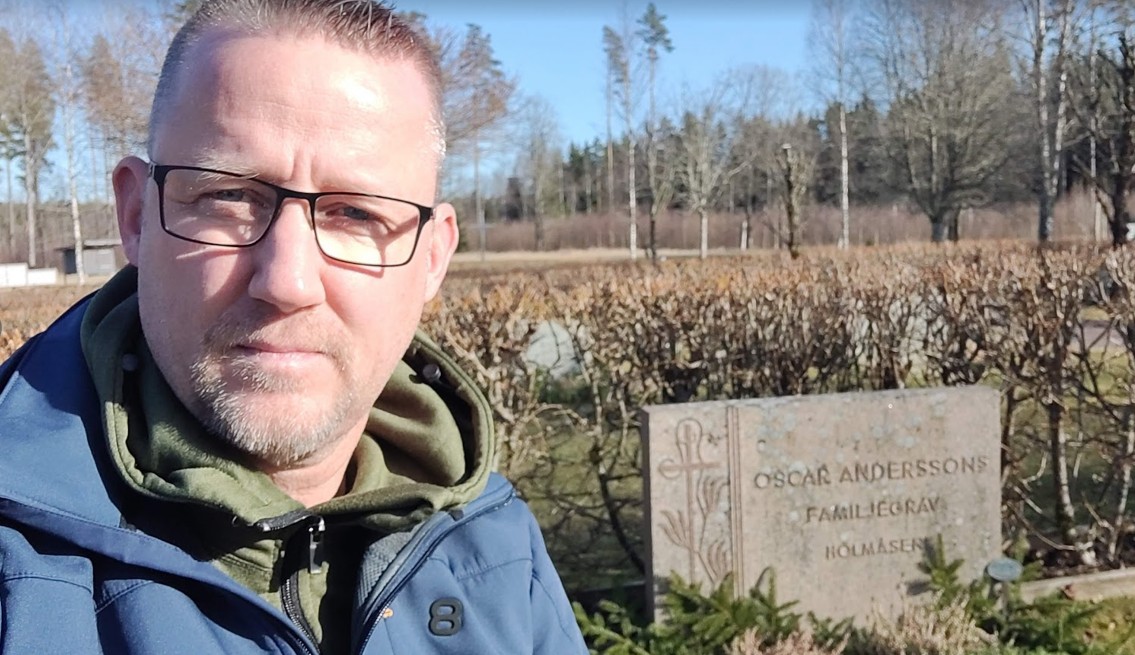
[Archive Note / Image Caption: Photograph of the author, Joacim Hallberg, visiting Oskar Andersson’s family grave (‘OSCAR ANDERSSONS FAMILJEGRAV HOLMÅSEN’).]
May the sons of the Månsarp parish rest in peace.